Press release distribution in the USA, from national desks to local newsrooms
Reach the US reporters who cover your field, at an hour that suits both coasts, with a headline and dateline our editors check before anything goes out.
- First release free to 10 outlets
- Same-day review
- From $15 per release
United States
- New York
- California
- Texas
- Florida
- Illinois
- Massachusetts
- Washington, D.C.
- Spanish
- 4
- Time zones in the contiguous US
- AP
- The style most US newsrooms follow
- 9:30 a.m. ET
- When US stock markets open
US press release distribution starts with the right desk
The United States is not one media market. It has national news and business sites, a trade press for almost every industry, and local newsrooms in every metro area, each with its own editors and priorities. A release about a new warehouse in Ohio matters to a Columbus business reporter and to logistics trade titles. It matters far less to a national technology desk in San Francisco.
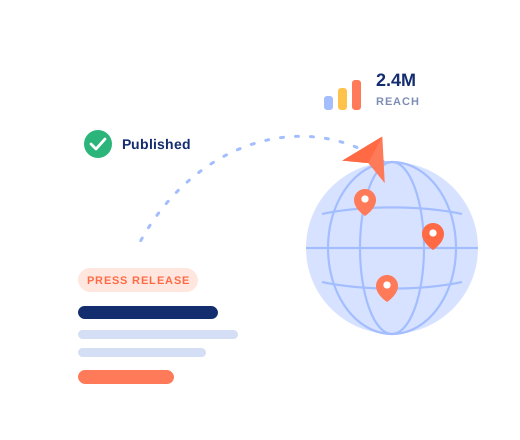
That is why press release distribution in the USA works best when it is aimed. You write or upload your release, choose the United States, and narrow it by industry and topic. Our editors review it the same day, checking the headline and the dateline, and it then goes out to US news sites, wire services, trade titles and the journalists who cover your subject.
Afterwards you get a placement report showing which outlets ran the story, each with a live link and its views and clicks.
Where US news gets made
American media is spread across several cities, and each one has its own beats and its own trade press.
New York
Manhattan holds most national business, finance and media desks, plus the big broadcast networks. Advertising, publishing, fashion and retail trade titles are based here too, so consumer brands and financial firms usually start with New York.
Washington, D.C.
Reporters here cover Congress, federal agencies and the courts. A dense layer of policy newsletters and trade association publications tracks regulation line by line, which makes D.C. the audience for news about funding, compliance or public policy.
San Francisco Bay Area
Technology reporters, venture capital newsletters and enterprise software titles are concentrated between San Francisco and San Jose. Product launches and funding rounds compete hard for attention here, so the first line has to say what is new.
Boston
Boston and Cambridge form one of the country's largest life sciences clusters. Local health, science and university reporters, along with the biotech trade press, follow clinical results, research funding and new lab openings closely.
Chicago
Chicago anchors Midwest business coverage: manufacturing, logistics, food, agriculture and the futures markets. Regional business journals and farm and commodity trade titles here read news from companies across the Great Lakes states.
Texas
Texas is several markets in one: Houston covers energy, Dallas-Fort Worth follows corporate headquarters and finance, and Austin watches tech and state government. Put the Texas city in your headline so local editors spot it.
The US outlets your release reaches
A US release travels through four main channels, and each one wants something slightly different.
National news and business sites
General and business news sites with readers across the country. They receive a flood of releases, so they respond to hard news with numbers attached: funding, results, research findings and launches that change a market.
Local and regional news
Metro news sites, city business journals and community outlets. A new office, a local hire, a plant opening or a donation to a local cause usually lands better here than on a national desk.
Trade and industry press
Almost every US industry, from trucking to dentistry, has its own trade magazines and newsletters. Their editors want the detail a national desk would cut: specifications, customer names, pricing and the people behind the product.
Newswires and finance portals
Wire feeds are read by editors across the country, and finance portals publish company news next to stock quotes. For a listed company, this is where many investors first see an announcement.
Practical tips for a US press release
A few American habits decide whether an editor reads past your headline.
Plan around Eastern Time
Most national desks work on Eastern Time. A release at 8 a.m. ET arrives as New York starts its day, but it is 5 a.m. in Los Angeles. If your news is aimed at the West Coast, 10 or 11 a.m. ET suits both coasts.
Write in AP style
Most US newsrooms follow the AP Stylebook. Spell out one to nine and use figures from 10, abbreviate months with a date (Sept. 30), and write the dateline city in capitals, followed by the state unless it stands alone, as CHICAGO does.
Skip the dead weeks
Thanksgiving week in late November, the days between Christmas and New Year, and the Friday before a long weekend such as Memorial Day or Labor Day are short on staff and readers. Friday afternoon is where news goes to be ignored.
Listed company? Check your duties first
Regulation FD bars selective disclosure of material information, and some news also needs a Form 8-K. A press release distribution is not an SEC filing and does not replace one. Most issuers publish results before the 9:30 a.m. ET open or after the 4 p.m. close.
Bundles for USA releases
The same bundles work for every region. Pick one, then target the USA by country, industry, and topic each time you send.
Starter
$290 a year
10 releases, $29 each
Growth
$990 a year
50 releases, $19.80 each
Global
$2,999 a year
200 releases, $15 each
Questions about press release distribution in the USA


Plans are sold as yearly bundles. The Starter bundle is $290 a year for 10 releases, which works out to $29 per release, and larger bundles bring the price per release down. The pricing page has the full list, and your first release can go to 10 outlets for free.
Targeting works by country, industry and topic, so you start with the United States and narrow it by subject. To reach one state or city, lead with the local angle and put the place in your headline and dateline, because local editors scan for place names first. A plant opening in Ohio should say Ohio in the first line.
Translation is included in every plan, with three languages on Starter, so you can send a Spanish version alongside the English one. Give it angles that matter to US Hispanic readers rather than a general Latin American audience. Spanish-language reporters will usually want a spokesperson who can do interviews in Spanish, so name one.
For most news, Tuesday to Thursday between 8 and 11 a.m. Eastern works well, because desks are planning the day and the West Coast is waking up. Avoid Friday afternoons and holiday weeks. A scheduled release time or an embargo lets you fix the exact minute in advance.
No. US editors and journalists make their own decisions, and no honest distribution service can promise a placement. We put your release in front of the editors and reporters who cover your topic at news sites, newswires and trade publications. The placement report then shows where it ran, with a live link, views and clicks for each.